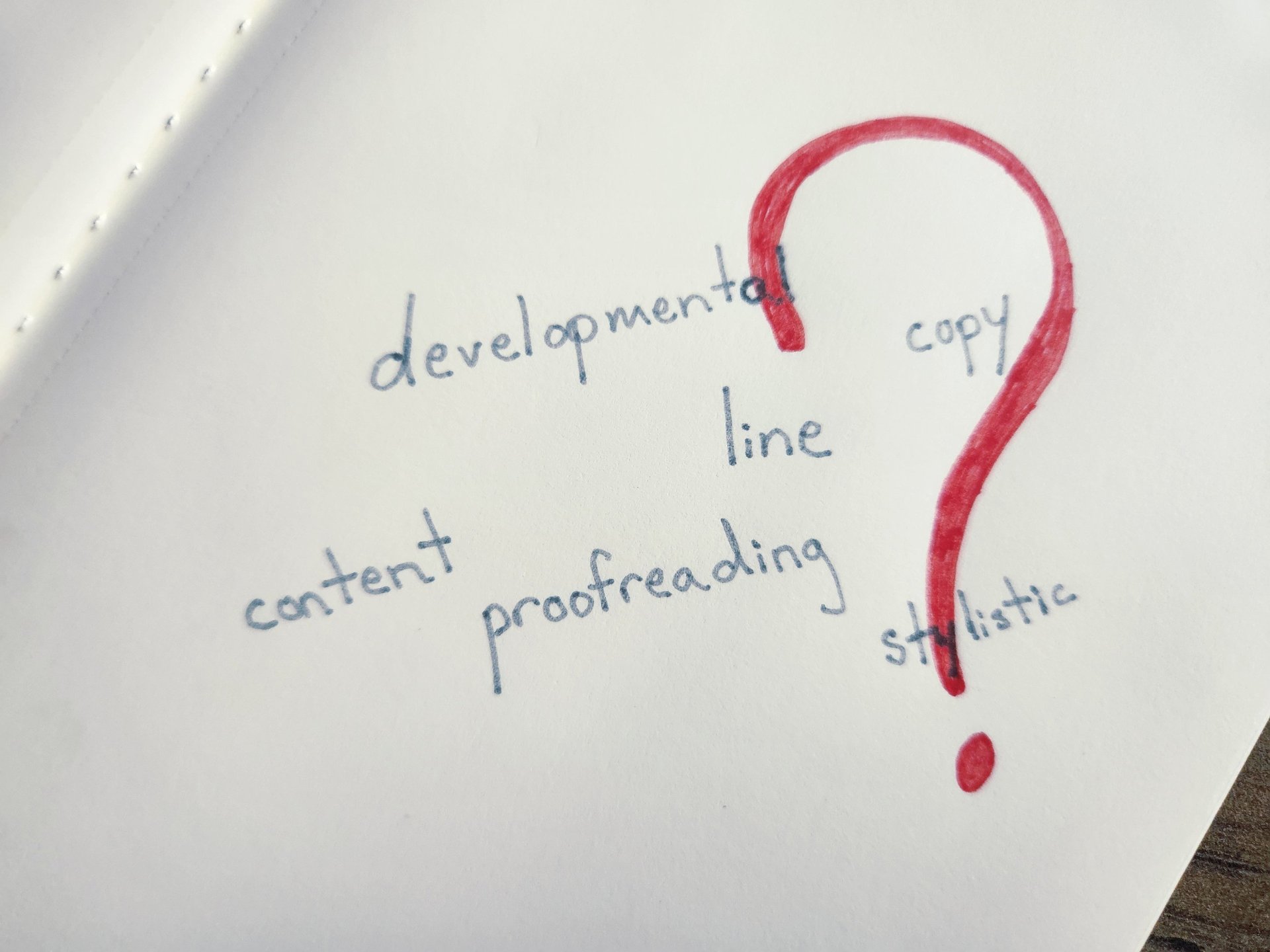
Developmental editing? Copyediting? Just a quick proofread? If you’re feeling lost in the terminology and not sure where to start, this is the post for you. We’ll cover what each term means, if you need to find an editor on your own, and some other editorial services that could help you through the process.
Jump to:
what kinds of editing are there?
Before anything else, let’s get clear about what your options are, because there’s way too much confusion out there for anyone’s health.
If you’re totally new to editing (or totally confused), think of the entire process like renovating a room in your house. Order matters. If you plan to take out a wall, that needs to be done before you worry about painting said wall, and you definitely don’t want to hang up all the pretty artwork until the paint on your new wall dries, yeah?
The same is true for editing. Do the big stuff first and work your way down to the details. From big picture to nitty gritty, here’s what the different stages of editing look like:
Developmental editing
Aka substantive or content editing. This covers all the big picture elements of plot, character, theme development, worldbuilding, and so on. If it could entail cutting chapters out, adding new ones in, moving things around, or doing some major rewrites, a developmental editor will be the one to handle it. They’ll also work within chapters to make sure the structure and pacing are working.
Line/stylistic editing
This level is all about the words on the page. A line editor works with the language, sentence structure, dialogue, and paragraph-level pacing to make sure readers are fully immersed. Boring language = loss of interest = readers don’t make it to the next plot point. A line editor also pays close attention to your narrative voice to bring out its best.
Copyediting
A lot of people outside of the publishing industry mistakenly call this a proofread (we’ll get to that next) because it’s the edit that takes care of punctuation and grammar errors (many of which grammar checkers miss). It goes deeper though. A copyeditor is focused on making all the tiny details correct and consistent, from alternative spellings, to the name of the street that one side character lives on, to how special text like words on a sign should be formatted. When your book is part of a series, they also make sure that the same preferences apply across books.
Proofreading
In the publishing world, this is very different from skimming your classroom essay for typos. A proofreader gets your book after it’s been formatted and designed, to give everything one last check before the book goes to print or upload. That’s everything from typos to page numbers to fonts and margins.
Whenever we try to define types of editing, we have to mention that there’s a fair amount of ambiguity across the industry—different editors will mean different things when they use these terms, assuming they’re using the same terms at all. Most frequently, I see editors lump line and copy editing together as one thing, or see developmental work bleed into line editing territory. It can be frustrating, especially as an already overwhelmed writer just trying to get to square one, but it’s not a reg flag if an editor defines their services differently than I do here. The best thing, no matter what service you’re looking for or who you talk with, is to ask what specifically their service does and does not cover, and get a sample if they offer it.
do I have to find an editor myself?
This depends on how you’re publishing. If you land a book deal with a traditional house, they’ll provide the whole nine yards. You’ll work either with their in-house editors or someone they hire for you. If you’re self publishing or going through a hybrid publisher, then finding and paying for an editor is up to you. (Some hybrid publishers will offer editing. More commonly, they offer some form of “editing support,” probably as part of a package, which is untailored and not super helpful). This is where freelancers come in—editors who are self-employed and work directly with writers, no publisher involved.
Publishing is a highly unregulated world, so you have to do your due diligence when hiring a freelance editor. There’s no official body out there handing out editor degrees to people who prove their worth. Anybody can go online and call themselves a professional book editor. So how do you find a good one?
Editor associations are a good place to start. These are organizations dedicated to professional freelance editing—pros pay to be a part of them, and they have active communities where editors gather and build their skills. They often have directories that you can search to find a good match, and job boards where you can post your needs and let the right editor contact you. These organizations don’t necessarily vet each member for their qualifications, but the required dues are a good barrier to scammers, and the group will protect their reputation by dealing with members who’ve had complaints filed against them or who’ve violated the organization’s code of conduct. Check out places like the Editorial Freelancers Association (that’s where I live, hi), ACES: The Society for Editing, the Northwest Editors Guild, and Reedsy.
Freelance editors also tend to be on social media platforms like LinkedIn, Facebook, and Instagram. Some have profiles on freelance job boards like Fiverr and Upwork, but there’s a high concentration of amateurs and outright frauds in places like these, so be vigilant.
some other useful services
Editing isn’t the only thing you can find a freelancer for. If it’s related to publishing, there’s a freelancer who does it. Here’s a quick overview of a few services that may help you through the editing process.
Manuscript evaluation
If you’re not sure if your story is ready for publication or what kind of editing it needs most, a manuscript evaluation can be super helpful. An editor will read your work and give you their feedback on things like its strong points, weak points, and what they recommend as your next step.
This service can be especially useful at the start of the editing process to give you a sort of road map going forward.
Authenticity reading
Aka sensitivity reading. Some editors (and other folks) from marginalized, under-represented, and stigmatized groups offer this service to give feedback on how your work will affect people of their identity. You can find authenticity readers for all sorts of things, like race, sexuality, medical conditions, and certain life experiences, like miscarriage or civilian war survival. Authenticity reading helps make sure you don’t unintentionally perpetuate harm against a group you don’t belong to—which in turn, protects your reputation as an author.
If you plan to get an authenticity read, it’s best to do before a developmental edit, since the feedback you get could recommend revisions that affect plot or character.
Book coaching
If you’re feeling really lost or it makes more sense for you spend the money than learn all the things about the publishing process, a book coach can be a valuable wingman. They can guide you through self editing and professional editing alike, among many other things. To be clear, they don’t do the editing themselves—they help you through the process with encouragement and practical guidance.
This is a very cursory introduction to what professionally editing your book will look like, whether you work with a publisher or tackle things on your own. In other posts, we’ll get into things like how to hire a freelance editor, triaging your edits on a budget, and if you should hire an editor when you plan to traditionally publish.
Happy writing!
